The Burnout Myths That Keep You Running on Empty (And What’s Actually Happening)
Why “Just Push Through” Isn’t Actually Strength
I hear this all the time: “I’m not burned out, I’m just really busy right now.” Sound familiar? Here’s the thing that took me years to understand. Burnout isn’t some dramatic collapse where you suddenly can’t function. It’s more like a slow leak in your emotional tire that you keep pumping air into, wondering why the ride feels so bumpy.
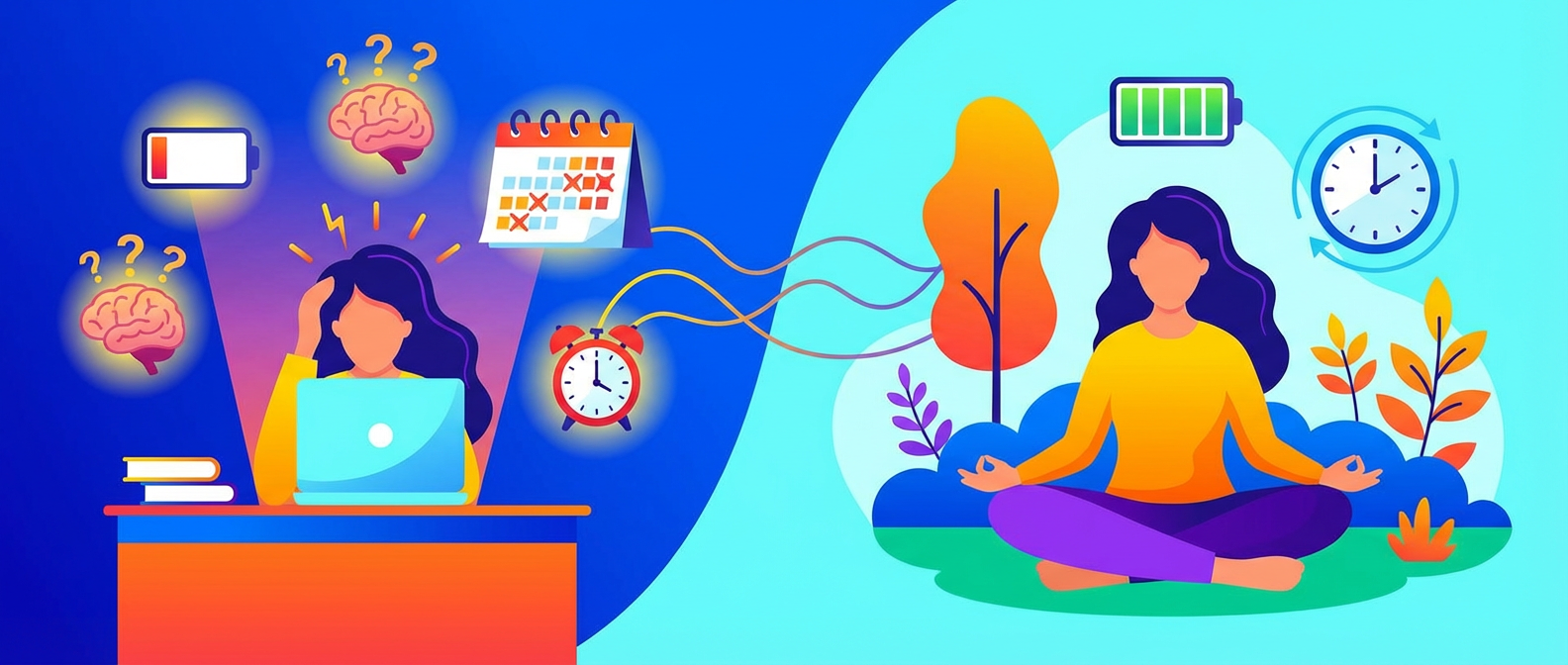
The myth that burnout only happens to “weak” people or those who can’t handle stress has done serious damage. Research from the Mayo Clinic shows that burnout is actually a workplace phenomenon recognized by the World Health Organization. It’s not a personal failing. It happens when the demands placed on you consistently outweigh your ability to cope, no matter how mentally tough you are.
The early warning signs don’t look like what you’d expect. They’re not dramatic. You might find yourself getting irritated by things that never bothered you before. Maybe you’re checking your phone obsessively but avoiding certain emails. Perhaps you’re sleeping more but feeling less rested, or lying awake replaying conversations from three days ago.

Your Body Keeps the Score (Even When Your Mind Says You’re Fine)
Your nervous system is smart, even when your conscious mind is in denial. It starts sending signals long before you’re ready to admit something’s wrong. That tension headache that won’t quit? The way you’ve been getting every minor bug that goes around? These aren’t coincidences.
Dr. Emily Nagoski’s research on the stress cycle explains this perfectly. When you’re in chronic stress mode, your body stays in a state of activation. Think of it like having your car engine running at high RPMs for months. Everything starts to wear down, but gradually enough that you adjust to the vibration and noise.
Physical symptoms often show up first. Digestive issues that seem to come from nowhere, changes in your appetite, or that wired-but-tired feeling where you’re exhausted but can’t actually relax. Your immune system starts struggling because it’s been reassigned to deal with the constant stress response. This isn’t weakness. This is biology.
The tricky part is that our culture has taught us to override these signals. We drink more coffee for the fatigue, take antacids for the stomach issues, and power through the headaches. But your body isn’t trying to inconvenience you. It’s trying to protect you by slowing you down before you hit the wall completely.
The Emotional Warning Signs That Masquerade as Character Flaws
Here’s where burnout gets really sneaky. The emotional symptoms often look like personality changes, which makes you think you’re just becoming a worse person. You might find yourself more cynical about work that used to excite you. Small frustrations feel enormous. You’re snapping at people you care about, then feeling guilty about it, which just adds another layer of stress.
One of the most misunderstood early signs is what researchers call “depersonalization.” This isn’t about losing touch with reality. It’s about feeling disconnected from your work, your relationships, or even yourself. You might catch yourself going through the motions without really being present, like you’re watching your life from the outside.
Another red flag that gets dismissed as “just being professional” is emotional numbness. When things that should make you happy or excited barely register, when you’re having trouble connecting with people you love, that’s not maturity or toughness. That’s your emotional system trying to protect itself by shutting down non-essential feelings to save energy for basic functioning.
The perfectionist trap makes this worse. If you’re someone who takes pride in doing good work, the decline in your performance or enthusiasm feels like a moral failing. You push harder, which depletes you further, creating a cycle that’s hard to break without outside perspective.
When Your Brain Starts Playing Tricks on You
Cognitive symptoms of early burnout are often the most confusing because they make you question your basic competence. You might find yourself reading the same email three times without absorbing it. Tasks that used to be automatic now require conscious effort. You’re forgetting things that are important to you, not just random details.
Dr. Christina Maslach’s decades of burnout research shows that this cognitive fog isn’t laziness or aging. It’s what happens when your working memory gets overwhelmed by stress hormones. Your brain starts prioritizing immediate survival over complex problem-solving, which makes perfect sense from an evolutionary perspective but feels terrifying in modern life.
Decision fatigue becomes overwhelming. Choosing what to wear or what to eat for lunch feels monumentally difficult. You might find yourself procrastinating on important decisions while obsessing over minor ones. This isn’t indecisiveness. It’s your cognitive resources being stretched too thin.
The comparison trap gets worse when you’re burned out. You look at colleagues who seem to be thriving and wonder what’s wrong with you. But here’s what you can’t see: everyone’s capacity is different, everyone’s life circumstances are different, and many people who appear fine are running on fumes too.
Breaking the Cycle Before It Breaks You
Recognition is the first step, but it’s not about diagnosing yourself into a corner. It’s about giving yourself permission to take these signals seriously before they become a crisis. Early-stage burnout responds much better to intervention than full-blown exhaustion.
Start with the basics that everyone recommends because they actually work: sleep, movement, and boundaries. But here’s the part that matters more. You need to address the underlying patterns that got you here. What are you saying yes to that you could say no to? What support systems have you been neglecting? Where are you trying to control things that are actually outside your influence?
Sometimes the solution isn’t adding more self-care activities to your already overwhelming schedule. Sometimes it’s subtracting commitments, lowering standards in areas that don’t truly matter, or having honest conversations about workload and expectations. This isn’t giving up. This is smart resource management.
If you’re reading this and recognizing yourself, acknowledging burnout isn’t admitting defeat. It’s choosing to pay attention to your internal wisdom before it has to shout to get your attention. Your future self will thank you for listening now.

The Math Behind Your Seasonal Eating: What 200 Studies Tell Us About Local Food and Health

Why Accessibility in Civic Technology Is a Democratic Necessity
The 72-Hour Rule: How Your Gut Bacteria Actually Change Your Mood (And Why Timing Matters)
About Author
